

2025 Mid-Year Economic Outlook
August 4, 2025
Revolutionizing Routing & Logistics
August 18, 2025
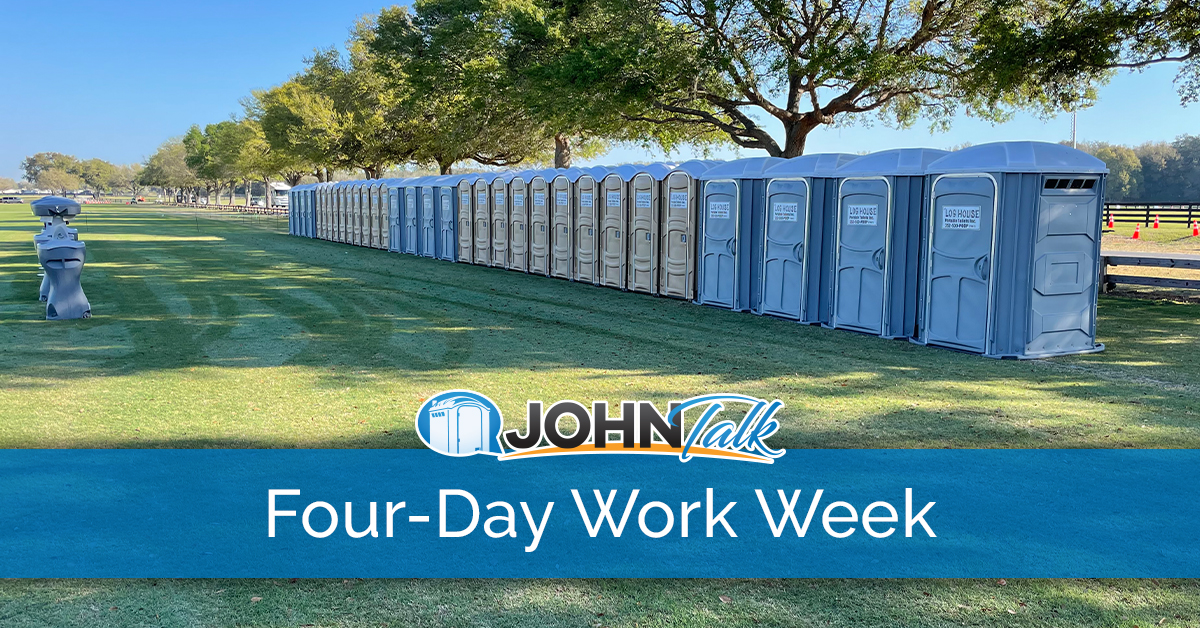
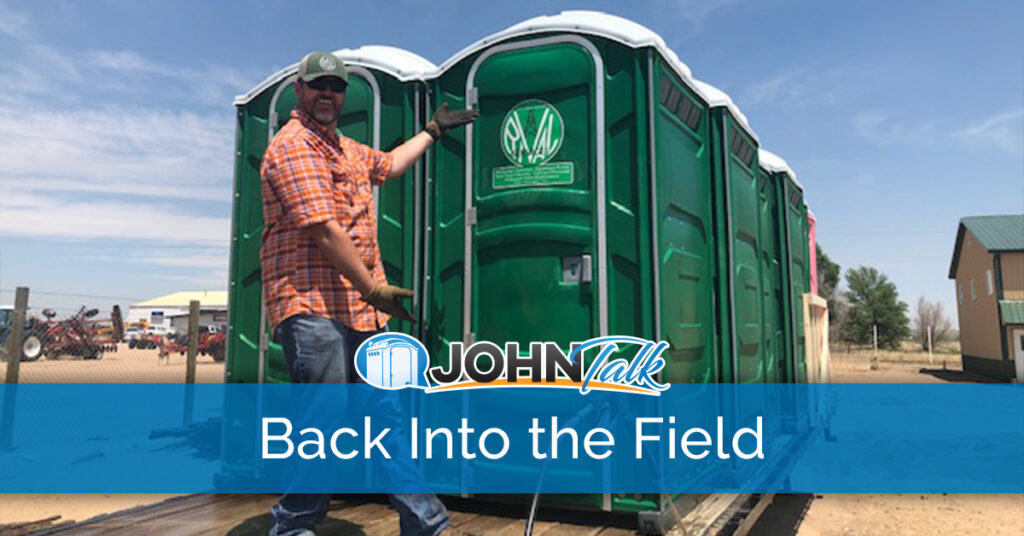
Photo courtesy Michael De Mers, The Log House Portable Toilets
Could a four-day work week help your business run better? Many studies suggest companies can reduce turnover and retain good employees longer by scheduling four shifts rather than five. However, deploying this model in restroom rental operations is more complex than in office settings. That said, four-day work weeks are possible for field technicians and delivery drivers, whether paid by salary or hourly. And it’s a scheduling option that more PROs are taking a second look at. Here’s why…
What is the Four-Day Work Week?
A four-day work week means employees work four days instead of five. For hourly employees in the U.S., this often means four 10-hour shifts. Elsewhere, hourly staff may work four eight-hour days, totaling 32 weekly hours. But this approach is versatile, and PROs can adjust the model to get the most out of the staff.
For example, owners may schedule techs or drivers four days a week, but daily hours vary by route. PROs also use compressed schedules for salaried staff, where shorter winter days balance longer peak season hours.
Benefits and Challenges of Scheduling Four 10s
Scheduling technicians and drivers for four days rather than five can improve your business in many ways. But it’s not as simple as flipping a switch. That’s why weighing the pros and cons of a four-day work week for different roles is essential. Switching to four 10-hour days lets you stagger routes or rotate trucks to cover more routes efficiently. So, if you have more work than trucks, but aren’t ready to buy a new vehicle, you may be able to improve capacity through four-day work weeks.
You can also expect benefits like:
- Fewer employees calling off work because they feel more rested and can occasionally get three-day weekends or a day off midweek without calling in
- Lower staff turnover due to employees being more satisfied with job conditions and less likely to burn out
- More qualified candidates may apply to open positions because it’s rare to find flexible schedules in the industry
However, 10- or 12-hour days are draining and can impact safety and service quality. This approach also requires careful scheduling and a willingness to track and adjust the model over time. Portable restroom companies must plan for emergency call-outs and one-time events, ensure weekend coverage, and watch overtime costs.
Get the JohnTalk “ALL-ACCESS PASS” & become a member for FREE!
Benefits Include: Subscription to JohnTalk Digital & Print Newsletters • JohnTalk Vault In-Depth Content • Full Access to the JohnTalk Classifieds & Ask a PRO Forum
How to Start: Tips for PROs
Good communication and flexibility are crucial to managing drivers and techs. To gain operational benefits of compressed schedules, PROs must optimize logistics while keeping tabs on service quality.
Consider:
- Starting with a pilot program: First, test your approach with a small team or specific routes, like for construction clients.
- Identifying key metrics: Decide how you will monitor customer satisfaction, employee feedback, and service times.
- Improving routes: Consider using route optimization software to increase efficiency and forecast the time and costs per route.
Stay Flexible with a Four-Day Work Week
The four-day work week isn’t a cure-all for every challenge PROs face. But it’s worth exploring if you want to build company morale and increase employee retention. You can devise schedules to fit your unique needs based on your mix of construction and event clients, number of employees, and number of trucks. Staying flexible and tracking data is the most important part because this lets you adjust as you move forward, finding a middle ground that benefits your operation as a whole.
Looking to Take Your Portable Restroom Business to the NEXT LEVEL? Download our FREE Guide: “Your Guide to Operating A Portable Restroom Business.”
Thinking About GETTING INTO the Portable Restroom Industry? Download our FREE Guide: “Your Guide to Starting A Portable Restroom Business.”