

Learning to Say No (And Mean It)
July 27, 2026
How a Pump Truck is Put Together and Operates
August 24, 2026
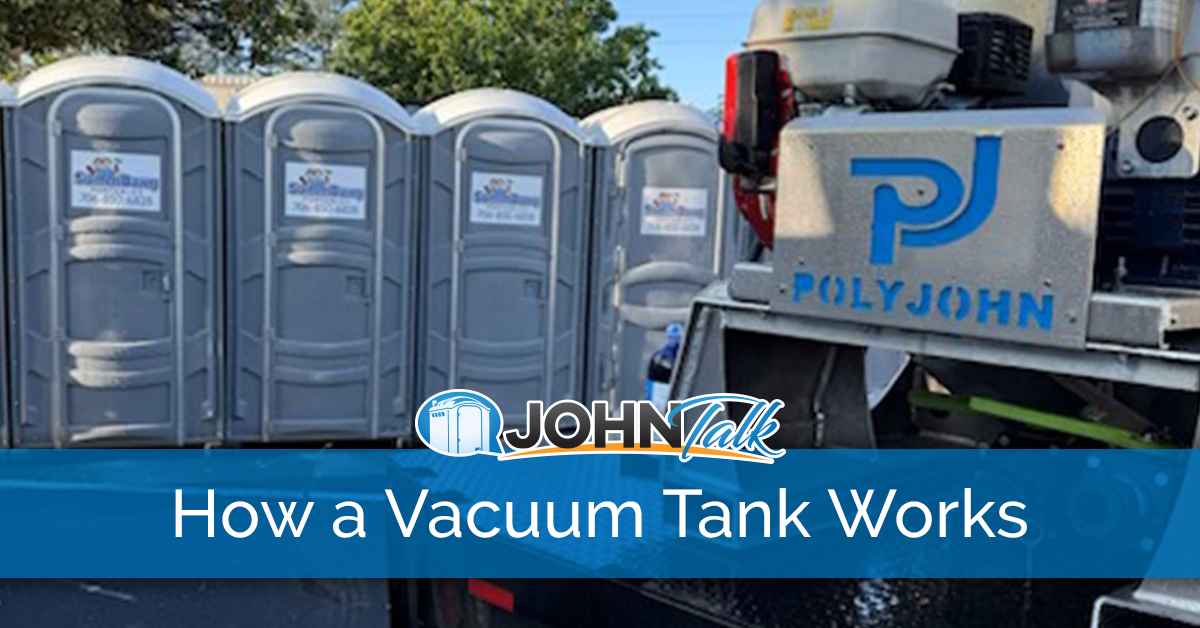
Photo courtesy PolyJohn
For a new portable restroom operator, a vacuum tank system may look complicated even though its basic job is simple: remove waste from portable restrooms, contain it during transport and discharge it at an approved facility.
Vacuum systems can be mounted on dedicated pumper trucks or built as slide-in units for pickup beds or trailers. While designs vary, they rely on the same basic process.
The Tank Does Not Create the Suction
Despite its name, the vacuum tank does not “suck” waste into the truck. A vacuum pump removes air from the sealed tank, lowering the pressure inside. Higher atmospheric pressure outside the tank then pushes waste through the wand and hose and into the tank, similar to how liquid moves through a drinking straw.
Because this process depends on a difference in air pressure, the system must remain airtight. A leaking hose, valve, fitting or seal can weaken the vacuum and slow down service.
Understanding the Main Components
The waste tank is a sealed vessel built to hold collected material while withstanding vacuum pressure. The vacuum pump removes air from that tank. Depending on the system, the pump may run through the truck’s power takeoff (PTO) or use a separate engine.
The suction hose and wand provide a path from the restroom’s holding tank to the waste tank. Gauges and sight eyes help the operator monitor pressure and the liquid level. A primary shutoff typically contains a float ball that rises as the tank fills. At capacity, the ball restricts airflow to help keep liquid from reaching and damaging the pump. Relief valves protect against excessive vacuum or pressure.
Many systems also include a freshwater compartment so the operator can not only remove waste but also wash the restroom and add fresh water and deodorizer during one stop. For a closer look at these features, read Everything You Need to Know About Your Truck. New PROs may also want to explore why slide-in units make sense for many operations.
Get the JohnTalk “ALL-ACCESS PASS” & become a member for FREE!
Benefits Include: Subscription to JohnTalk Digital & Print Newsletters • JohnTalk Vault In-Depth Content • Full Access to the JohnTalk Classifieds & Ask a PRO Forum
From Collection to Disposal
During service, the operator engages the pump, places the wand in the holding tank and opens the inlet valve. As the pump removes air from the vacuum tank, atmospheric pressure moves the waste through the hose. The operator watches the toilet tank level and closes the valve when pumping is complete.
At an approved facility, waste is commonly released through a discharge valve using gravity. Some systems can use pressure to assist, but only equipment designed for pressure discharge should be operated that way and always according to manufacturer instructions.
Protecting Your Equipment
Only air should reach the vacuum pump. Checking pump oil, hoses, seals, gauges, shutoffs and moisture traps can help prevent breakdowns. Following the manufacturer’s maintenance schedule and learning how to prevent and fix common pump problems will help keep the system reliable.
Once you understand the central principle, the process is straightforward: the pump removes air, atmospheric pressure moves the waste and the tank contains it safely.
Looking to Take Your Portable Restroom Business to the NEXT LEVEL? Download our FREE Guide: “Your Guide to Operating A Portable Restroom Business.”
Thinking About GETTING INTO the Portable Restroom Industry? Download our FREE Guide: “Your Guide to Starting A Portable Restroom Business.”