

Industry Technology Spotlight: Neurofy
April 20, 2026
Volatility in the Resin Market
May 4, 2026
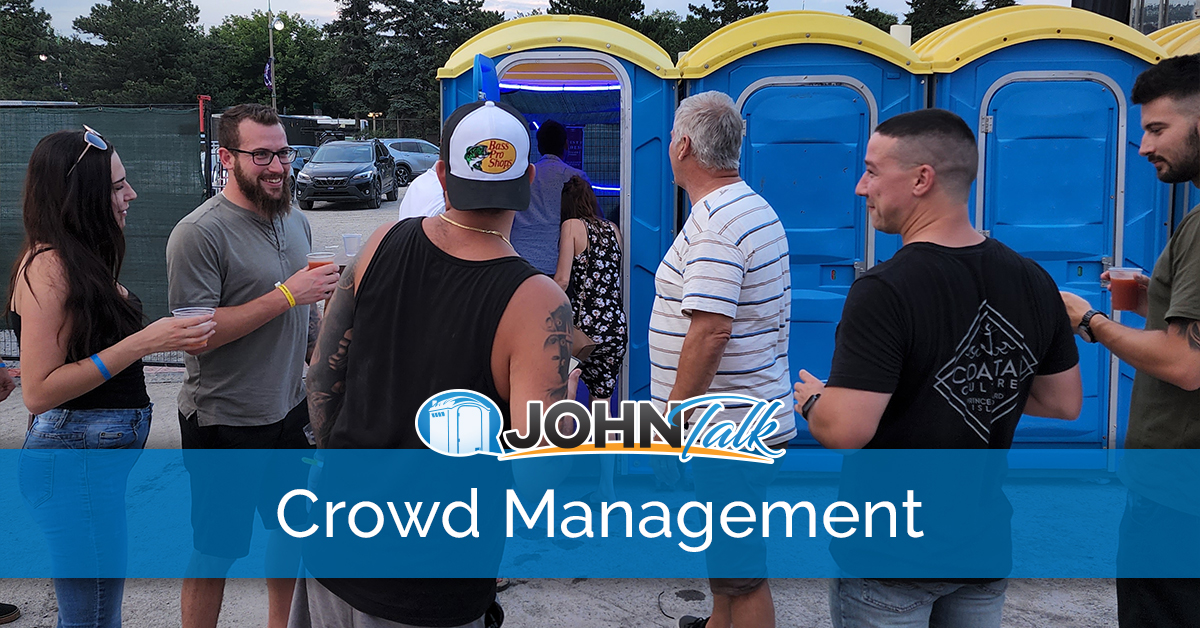
Photo courtesy Christian Doucet, Gascon Equipement
Physical environments influence human behavior. At events, the environment includes portable sanitation. As such, restroom capacity, positioning, and servicing affect the flow of people. These factors could also impact how long guests stay or how much money they spend. Portable sanitation’s role in crowd management involves planning for these and other aspects.
By sharing your expertise early and coordinating with organizers, you can help control flow, reduce congestion, and prevent problems. Explore crowd management basics for portable restroom operators to learn how your setup, including layout, location, quantities, and lighting, shapes behavior and movement. Then, lean into your role as an advisor using tips and best practices to enhance your customer’s experience and your business’s reputation.
What is Crowd Management?
Crowd management is the process of planning and controlling how people move through a site to keep conditions safe and predictable. While event organizers oversee overall safety, portable restroom operators directly influence crowd behavior through sanitation setup, availability, and servicing.
Here are a few ways that PROs contribute to crowd management:
- Meet the sanitation needs of attendees: Provide the right number of units for the crowd size and maintain availability to prevent restroom lines from creating congestion or disrupting flow.
- Support safety and accessibility across the venue: Ensure ADA compliance, secure units, and recommend lighting or fencing to improve visibility and reduce risk.
- Shape traffic flow through restroom planning: Assess the site and suggest locations and configurations that reduce bottlenecks and keep walkways clear.
- Coordinate with event staff to prevent disruptions: Practice proactive communication by discussing service timing and escalation procedures with onsite teams.
Understanding ANSI ES1.9: Crowd Management
The American National Standards Institute (ANSI) provides best practices and technical specifications for crowd managers, vendors, and rental companies. ANSI ES1.9: Crowd Management is part of a collection of standards for special event safety. It helps planners assess how crowds move during entry, circulation, and exit. For portable restroom operators, these standards reinforce the importance of planning sanitation around movement patterns, peak demand, and emergency access.
ANSI ES1.9 offers a risk matrix: DIME-ICE. It examines how different factors affect guests at each phase of an event under normal vs. emergency conditions. This model covers three phases: ingress, circulation, and egress (ICE). Some planning tools also look at guest travel to and from gatherings: TICE(T). For each stage of the event, organizers assess site design, information, and guest expectations (DIME).
Portable Sanitation’s Role in Crowd Management
The general principles of crowd management align with best practices for restroom placement and utilization. Since sanitation plays a direct role in how crowds behave, from shaping flow to reducing bottlenecks, it’s important to educate customers about portable restrooms at events.
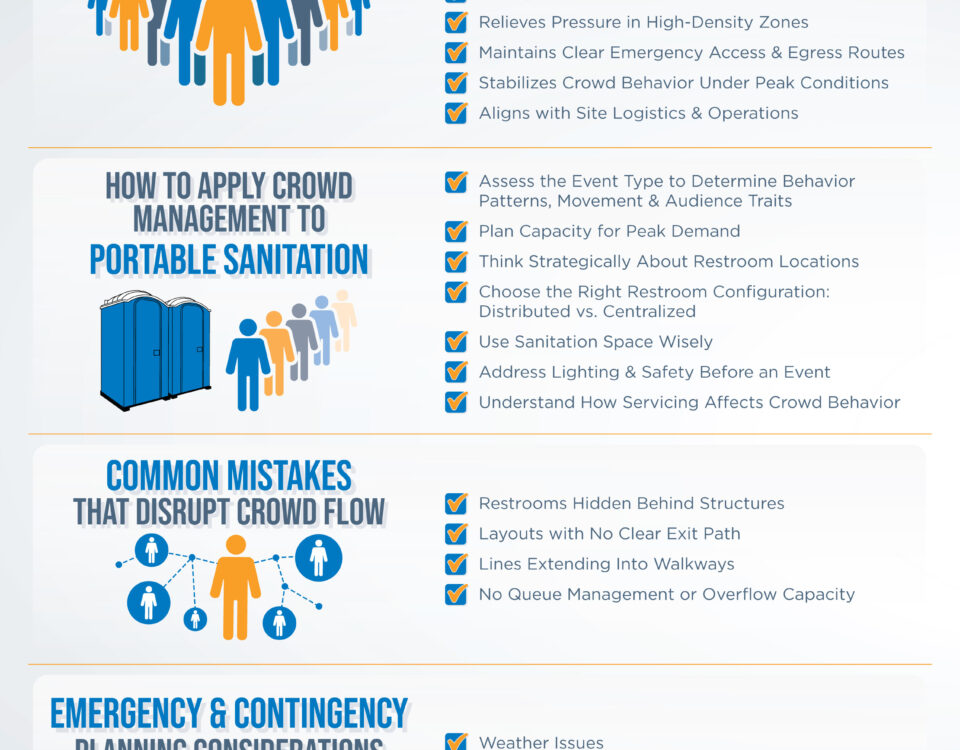
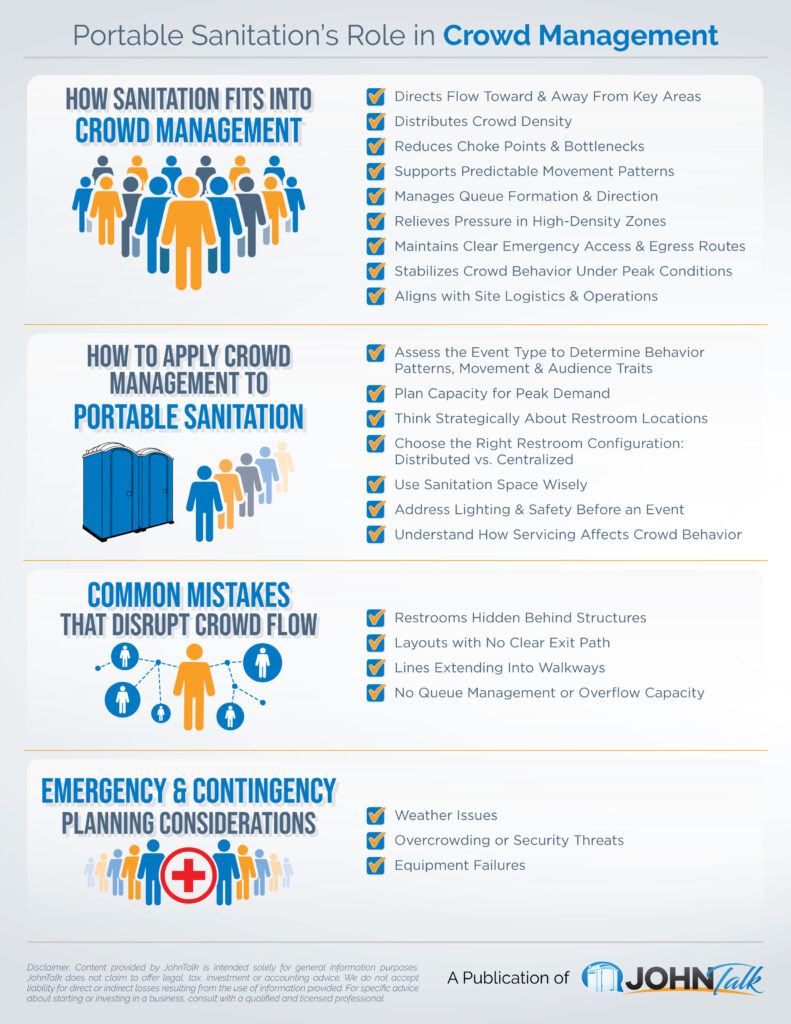
Here’s how sanitation fits into crowd management:
- Directs flow toward and away from key areas: Restroom placement guides people along specific paths, shaping how traffic flows across the site.
- Distributes crowd density: Placing toilets in clusters across large venues spreads demand and reduces pressure in high-traffic zones.
- Reduces choke points and bottlenecks: Strategic placement prevents restroom lines from blocking walkways, entrances, and exits.
- Supports predictable movement patterns: Recurring restroom use creates patterns that you can anticipate and plan around.
- Manages queue formation and direction: Your layout (and the spacing around units) keeps lines contained and out of active traffic areas.
- Relieves pressure in high-density zones: Well-placed toilets move people away from crowded areas, like food zones, stages, or gathering points.
- Maintains clear emergency access and egress routes: Proper spacing and placement ensure restroom lines don’t interfere with critical access paths.
- Stabilizes crowd behavior under peak conditions: Accessible, well-maintained restrooms reduce frustration and discourage unsafe behavior.
- Aligns with site logistics and operations: Planning servicing routes and timing to prevent operational disruptions to crowd movement.
7 Ways to Apply Crowd Management to Portable Sanitation
Crowd behavior and movement patterns can vary greatly. Knowing what to expect and prepare for helps prevent guest complaints and maintenance problems. As a PRO, you can differentiate your business by showing customers how you incorporate crowd-management principles. Let’s go over how you can plan and implement best practices for restrooms at any event.
1. Assess the Event Type to Determine Behavior Patterns, Movement, and Audience Traits
The type of event influences human behavior and movement. Consider a public pavilion. When rented for a large corporate gathering, people pay attention to the main speakers, move into breakout groups, and use restrooms at scheduled intervals. The atmosphere is professional, at least until drinks and entertainment arrive. Even then, guests generally follow the norms of their corporate culture.
But when you bring people from all walks of life to a festival, arrival times and interests vary. The venue stays the same, but the mood changes. Families cluster near the face-painting and game areas, while adults check out street vendors and teens look for less visible places to hang out.
To successfully plan and execute special events, assess:
- Event structure: Movement differs between events with predictable schedules and breaks vs. continuous, uneven traffic flows. Map out the timeline or agenda to see when movement will be staggered or synchronized.
- Dwell patterns: Look at where attendees spend most of their time. Walk the site plan or lay out and mark high-dwell zones where people are likely to gather or stay for extended periods.
- Demographics and expectations: Age, mobility, and the purpose of the event affect how often people use restrooms, their willingness to walk to less crowded areas, and their patience for lines. Review information about the target audience or past event data to anticipate behavior and tolerance levels.
2. Plan Capacity for Peak Demand
Crowds don’t use restrooms evenly. They surge at specific times, such as during concert intermissions. Your customers may estimate the number of toilets they need based on expected ticket sales or the average usage for a set number of people. But this approach can fail during peak demand, creating long lines and poor guest experiences.
Your role in crowd management is to push back when the number of units is less than ideal for the large gathering. If event organizers question the need for additional toilets, show them how they contribute to the event’s economic success. Shorter lines and convenient access give attendees more time to purchase items or participate in activities. Decide how many units are needed, and when, by noting heavy use time windows, including post-meal periods, intervals between performances, and closing time.
3. Think Strategically About Restroom Locations
While sites must be level and accessible for workers, you must also consider how the location addresses crowd management. Restroom placement shapes how people move through an event. Poorly placed units block traffic flow or cause chaos when people cross through the sanitation area. Effective crowd management ensures the location aligns with how people move through the space.
Plan restroom placement around movement by:
- Placing porta-potties along natural walking paths
- Putting toilets near high-traffic zones like food trucks or stages
- Installing portable restrooms along the perimeter to reduce central congestion
- Positioning clusters of units between major attractions to spread out foot traffic
- Adding porta-potties near entrances and exits
Get the JohnTalk “ALL-ACCESS PASS” & become a member for FREE!
Benefits Include: Subscription to JohnTalk Digital & Print Newsletters • JohnTalk Vault In-Depth Content • Full Access to the JohnTalk Classifieds & Ask a PRO Forum
4. Choose the Right Restroom Configuration: Distributed vs. Centralized
Centralized restroom banks are easier to service, but concentrate demand in one spot. Distributed setups spread units across the site, reducing pressure on any single area. As a result, there may be less queue buildup. But open areas can handle centralized units better than tight or high-density sites.
The right configuration depends on how crowds move, gather, and use space throughout the event. A centralized layout works well for structured events, like conferences or corporate functions. Festivals, fairs, and public gatherings benefit from smaller clusters of toilets.
5. Use Sanitation Space Wisely
Even when you have the right number of units, poor internal layouts can create uneven usage and longer wait times. Changing the layout can improve flow and utilization. For example, research shows that people tend to use the center and end toilets more than the others in a row of porta potties.
Try these tips when planning restroom layouts:
- Configure units to enhance visibility: Avoid long, straight rows where doors are hard to see. Use U-shaped or staggered layouts so attendees can easily find available restrooms.
- Prevent line buildup at row ends: People often wait at the end of straight-line configurations rather than filling available units. Smaller groups may work better than long rows that face each other.
- Optimize entry and exit flows: Leave enough space for people to move in and out without crossing through those waiting, especially for families or guests with mobility needs.
- Standardize layouts: Consider setting up units in the same way at each cluster. A repetitive layout helps guests and service technicians navigate spaces faster.
6. Address Lighting and Safety Before an Event
Safety and accessibility factors affect toilet usage. If people see sanitation zones and feel safe, they use them. Less visible restroom areas are often a last resort. So even if an event has the right number of toilets, these issues can result in uneven restroom usage, creating high demand and long lines in some zones and underused capacity in others.
Along with securing units to reduce tip-overs, you should look at the site to see how visibility changes after dark. Identify paths or porta potties that need additional lighting. If using signs, make sure these stay visible at night. A well-lit environment helps deter crime.
You can also recommend add-ons and upsells that tie directly into crowd management, including:
- Solar lights: Interior lighting improves hygiene and safety, while solar lights outside of toilets ensure attendees can see the occupancy status on the door indicators.
- Restroom attendants: Your staff can monitor queues, deter bad behavior, and replenish supplies as needed.
- Temporary fencing: Use fencing to guide guests in and out of restroom zones and to separate staff and attendee spaces.
- Sinks and hand sanitizer stations: Add standalone handwashing or sanitizer units to move people away from toilets or tight sanitation zones. Keeping them well-lit encourages use.
7. Understand How Servicing Affects Crowd Behavior
When toilets go offline or service vehicles enter active areas at the wrong time, they can create bottlenecks, demand spikes, or confusion. Minimize disruption by knowing how long it takes to service a portable toilet and creating an effective strategy.
Your plan may include:
- Scheduling servicing during low-traffic windows to reduce crowd density and wait times
- Resupplying restrooms before peak demand to improve experiences
- Planning service routes that avoid active walking paths
- Spacing out servicing so users always have nearby options
- Using signs or staff to communicate temporary closures and direct people to alternatives
Common Mistakes That Disrupt Crowd Flow
Small issues with location or layout can cause confusion or safety risks. If you apply crowd management basics during planning, you can identify and fix problems before they affect your site.
Avoid these common mistakes:
- Restrooms hidden behind structures: Hard-to-reach, isolated, or hidden units cause confusion. As a result, people wander, ask staff, or cut through restricted areas trying to find them.
- Layouts with no clear exit path: When exits are unclear, or the layout creates a dead end, crowds build up. Ensure each sanitation zone has enough room for people to move in and out. Remember, families with strollers or those with mobility issues may need more space.
- Lines extending into walkways: If units or queues affect natural traffic flows, movement can slow down or come to a halt. Offset units from the main paths and define the queue areas.
- No queue management or overflow capacity: People form lines anywhere they can and have nowhere to go during high-traffic periods. Barriers or spacing units can control queue direction and length, while a backup zone can decrease overcrowding.
Emergency and Contingency Planning are Key to Effective Crowd Management
Traffic flow and crowd reactions change when human or weather-related incidents occur, which is why the crowd management risk model looks at regular and emergency conditions. Backup and emergency planning help your staff address problems faster or communicate with on-site staff.
On your end, consider the following:
- Weather issues: Be prepared to provide more supplies or cleaning services during rainy or very hot conditions. Discuss contingency plans with organizers for muddy sites and paths.
- Overcrowding or security threats: Provide clear instructions to your staff outlining their role when on-site. This may include requesting assistance through the appropriate channel to help with unruly guests or to direct others to another sanitation zone.
- Equipment failures: Electric outages, unexpected water usage, broken restroom locks, and other issues require quick responses. Make sure event staff know how to contact you in emergencies and how to designate toilets as out of service.
Questions to Ask Before Finalizing Quantity and Placement
Better planning enhances safety and attendee experience. But event organizers may focus on the big picture and unconsciously overlook sanitation challenges. Use a special events checklist to get the information you need to make capacity and placement decisions.
You can learn about crowd flow and identify potential congestion points by asking these questions:
- Where are the highest traffic areas?
- When will peak usage or crowd surges occur?
- What type of crowd is expected, and how will they behave?
- How will attendees move between main areas?
- Where are the emergency access routes and exits?
- Are there restrictions on toilet placement, such as environmentally sensitive areas?
- How will servicing vehicles access toilets without disrupting the flow?
- Will venue-provided fencing affect sanitation zones?
- Could lighting improve crowd movement, safety, or security?
Turn Sanitation Planning Into a Competitive Advantage
Plenty of porta-potty companies deliver and set up sanitation solutions at events. But not all of them understand how sanitation affects crowd management. To succeed with special events and stand out from competitors, position yourself as an advisor. Know the regulations, recommend site or layout improvements, and participate in pre-planning stages.
Looking to Take Your Portable Restroom Business to the NEXT LEVEL? Download our FREE Guide: “Your Guide to Operating A Portable Restroom Business.”
Thinking About GETTING INTO the Portable Restroom Industry? Download our FREE Guide: “Your Guide to Starting A Portable Restroom Business.”