
INFOGRAPHIC: Build a Marketing Plan on a Budget
July 21, 2025
The Four-Day Work Week
August 11, 2025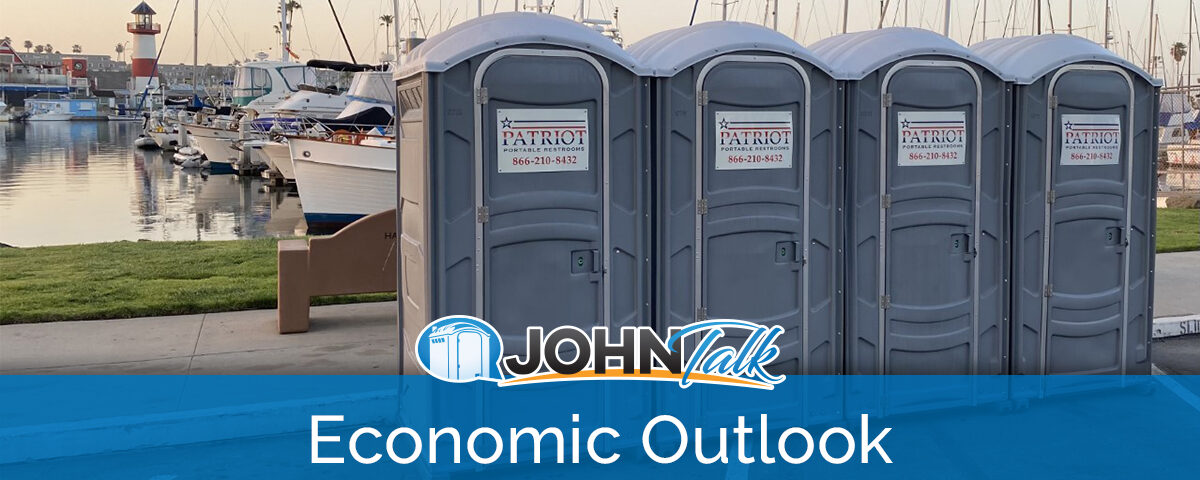
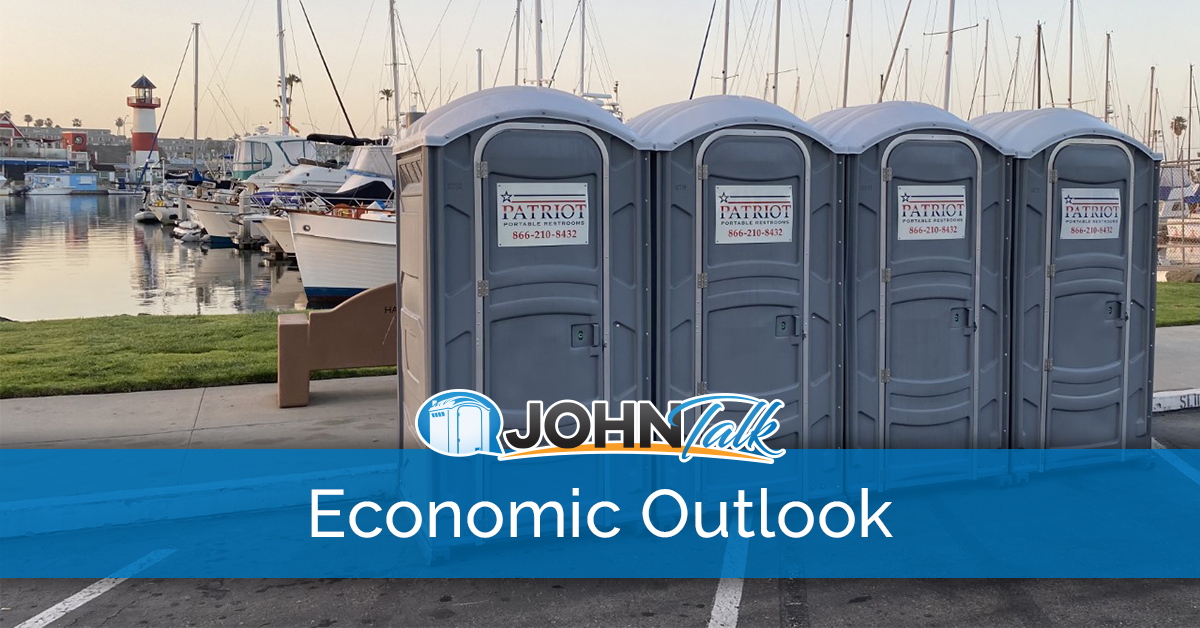
Photo courtesy Chad Rott, Patriot Portable Restrooms
Summer operations run full tilt, keeping portable restroom owners busy “in” the business. But there are plenty of pots to service and accounts to win before the year ends. As we head into the third quarter, it’s time to check in and see what’s ahead.
Our 2025 mid-year economic outlook looks at the economy and industry trends affecting your bottom line. The good news is that PROs fared better than in previous, more turbulent years. And in this steadily growing market, opportunities exist when the timing is right. Explore the latest insights and learn how to turn today’s conditions into tomorrow’s advantage.
Mid‑Year Snapshot: Economy and Industry Trends
- What’s driving demand? Events, construction, and public-sector projects fuel portable restroom rentals. Luxury units are the fastest-growing segment. However, a 2024 report found municipal work had increased by 600% since 2022.
- Is the market growing? The global portable toilet rental market is rising steadily, with most forecasts showing predictable compound annual growth rates of around 7.7% or more through 2032.
- Where do prices stand? Plastic production costs are about the same as last year. They dropped a bit in January before rising slightly by July. Gasoline and diesel prices are down while paper supplies rose slightly.
- Is labor still a concern? Skilled drivers and techs remain in demand. In small business sectors, over one-third report unfilled job openings, and wages rose 3- 5% in 2025.
- What’s affecting profitability? The solid demand for portable restroom services has helped businesses be resilient against cost pressures. However, operational expenses remain above preferred levels.
Then vs. Now: The Big Picture
In the first half of the year, robust outdoor events and construction markets fueled demand for portable restrooms. Forecasts held steady throughout 2025, with the current global market valued at around $20.58-21.41 billion.
Small business owners are positive, with the National Federation of Independent Business (NFIB) noting stable optimism rates slightly above the 51-year average. Mid-sized business leaders express similar sentiment about their company’s performance. Over three-quarters of respondents to J.P. Morgan’s 2025 mid-year survey expect revenue, sales, and profits to increase or stay the same.
Costs continue to impact margins across the board, and business owners experience the ups and downs of local markets differently. However, consistent market growth, driven by reliable event and construction customers and a slightly stronger economy, opens the door for opportunities. Here’s a closer look at the details.
Costs and Prices: What’s Changed?
Let’s face it: The summer supply chain has been volatile for years. Seasonal differences aside, prices are higher than most operators would like, even as inflation has slowed. There isn’t a fast fix for stubbornly persistent retail prices or geopolitical-driven port delays.
Check out the latest figures for operational supply costs and fuel:
- Gasoline: Prices dropped year-over-year, averaging about 10% less in July 2025 vs. July 2024. Costs from January to July declined by about 2-3% through early summer.
- Diesel: According to official monthly averages, diesel costs were down 6% year-over-year and about 1% lower than in January. The weekly retail price ticked upward in July.
- Plastic: Production costs for plastic resin largely flat-lined year-over-year, yet rose over 2% since January 2025. Port congestion, tariffs, and high demand affect equipment and part costs.
- Cleaning chemicals: The Producer Price Index (PPI) for chemicals and deodorizers hasn’t moved this year. According to the Bureau of Labor Statistics, prices ticked up about 1% since mid-2024.
- Paper goods: Costs climbed 1.6% since 2024 but are nearly flat since January, up only 0.2%. Restocking toilet paper and paper towels is still pricey, but costs aren’t skyrocketing.
Labor Landscape
Finding qualified workers remains a challenge for PROs and SMBs. According to NFIB’s June jobs report, labor quality is a significant problem for 16% of respondents, and it hasn’t fallen below this figure since April 2020. Unskilled labor openings didn’t budge for five consecutive months in 2025, with 13% unable to fill positions while 30% had openings for skilled workers.
Inflation, Interest, and Taxes
Financing costs remain stable but high mid-year. The Federal Reserve’s benchmark interest rate range has been 4.25- 4.50% since 2024. Inflation also remains sticky. While below previous extremes, it’s currently higher year-over-year and trending modestly upward.
For small business owners in NFIB’s June 2025 survey, concerns about inflation dropped to levels seen in September 2021, meaning they’re less worried this year. However, 19% of owners were worried about taxes, identical to July 2021 rates. On the other hand, J.P. Morgan’s survey of mid-sized companies identified their top concerns (revenue and economic uncertainty) unchanged from December 2024 and June 2025.
Equipment Investments
In the last six months, 50% of small businesses reporting to NFIB made capital purchases. This is down six points from May and the lowest reading since August 2020. Of those spending money, 33% acquired new equipment, 18% purchased vehicles, and 13% expanded or improved facilities. According to J.P. Morgan’s survey, most mid-sized companies aren’t changing their strategies. While 40% are proceeding as planned, 23% indicated that their plans have been delayed into 2026, while 21% mentioned that they are delayed but on track for 2025.
Get the JohnTalk “ALL-ACCESS PASS” & become a member for FREE!
Benefits Include: Subscription to JohnTalk Digital & Print Newsletters • JohnTalk Vault In-Depth Content • Full Access to the JohnTalk Classifieds & Ask a PRO Forum
2025 Mid-Year Economic Outlook for PROs
Stability has been the name of the game for PROs in 2025. Operators have reliable work throughout the U.S. and other parts of the world. Inflation is tamer than naysayers predicted. The “One Big Beautiful Bill” (OBBB), signed on July 4, 2025, restored 100% bonus depreciation for qualifying assets, and experts believe interest rate cuts could occur this fall. Check out what’s coming up in the second half and beyond.
Fleet and Fuel Costs
Filling up vehicles should get cheaper this fall and winter. However, costs remain higher for fleet maintenance and repairs. The Energy Information Administration (EIA) estimated that gas prices would drop in Q3 and Q4 for most of the U.S., except areas affected by refinery cutbacks. Stable or modest declines should continue into 2026.
In its July 2025 Short-Term Energy Outlook (STEO), the EIA updated its diesel forecast upward. It expects on-highway diesel to average $3.61 a gallon in the third quarter and $3.59 in the fourth. While new estimates put 2025’s average annual diesel cost on track to be higher than 2024 ($3.80 vs. $3.76), look for potential relief in 2026, with an estimated yearly average of $3.60.
The costs to maintain and repair your fleet will likely remain at similar levels or edge upward. Tariffs on parts, expensive costs of plastic production, and unrelenting demand mean longer lead times and higher prices. Route optimization and predictive maintenance tools will help PROs navigate thin margins.
Equipment Pricing and Financing
Work trucks and portable restrooms are in demand, leaving little room for price breaks in the coming months. Over 20% of NFIB respondents plan capital outlays in the final six months, and construction fleet replacement rates mimic 2024 levels. Combined with portable toilet market trends, PROs can expect demand to keep steady pressure on prices.
Kelley Blue Book (KBB) reported that average transaction costs for pickups were down 2- 3% since last year. Meanwhile, manufacturers increased prices an average of 2.3% across all vehicle segments, suggesting dealers are eating the costs.
Some experts expect equipment prices to creep up and fewer incentives to be available. PROs can offset costs by planning their financing and leasing decisions. With the right timing, you can take advantage of potential interest rate cuts and tax relief.
Industry and Economic Pressures
Although resin prices bottomed out in late 2024, they rebounded by early 2025. Plastics Today cited tight inventories, tariffs, rising freight costs, and supply-chain uncertainty as reasons for potential price increases later this year. Other goods may stabilize, reflecting benchmark trends from 2024. Notably, dump station fees will likely remain at last year’s levels or edge higher.
Operational expenses for utilities could increase through 2025 and into 2026. Electric prices continue to rise faster than inflation. The Midwest saw a 6.8% increase from May to June, above regional averages. Likewise, the EIA reported that natural gas costs increased significantly over last year’s levels before stabilizing in June. The agency expects prices to rise well into 2026.
External pressures and regional differences also play a role in costs and revenue. Unfortunately, there aren’t clear-cut answers to when inflation or interest rates will drop. The general outlook is that inflation will range from 3- 3.5% for the rest of the year, and 2.5- 3% in 2026. Most experts believe the Fed will cut interest rates by the 4th quarter.
Portable Restroom Revenue Outlook
Overall, standard units maintain the largest portable restroom market share, but luxury models are lucrative. PROs see the highest global demand in construction applications due to a surge in infrastructure projects. Disaster relief projects also tend to pick up through the rest of the year.
Our research showed stable 10-year forecasts for toilet rentals, ranging from 7- 8% annual growth. Many operators face or will face increased pressure from competition, suggesting it’s a good time to partner with friendly rivals and set the stage for winning with service and quality during local showdowns.
PROs’ Playbook for the Final Half
For many operators, Q3 and Q4 plans haven’t changed much from the start of the year. Your customer base is reliable, and regardless of prices, you must buy toilet paper when supplies run low, repair units, and upgrade equipment. Others may want to recalibrate budgets and plan end-of-year purchases. Use these tips to end the season strong.
Act When the Time Is Right
The tax benefits of purchasing before the end of the year are promising in 2025. As of April, new equipment prices had stabilized, according to FlowMark’s Scott Bjertnes on ToiletTalk. With good timing, you might be able to catch a discount or interest rate cut to sweeten the deal.
Consider these options:
- Finance equipment or capital purchases before the year ends. An interest rate decrease could mean thousands in savings. Combine with a tax write-off, like the Section 179 deduction, to maximize savings.
- Spend on equipment that saves time, fuel, or labor. When choosing between capital purchases, focus on those that cut costs in a key area for a clear return on investment. For example, vacuum trailer systems can reduce servicing costs.
- Watch for used equipment deals. Competitors or market partners may downsize or offload older inventory in the upcoming months. Look for opportunities, as good deals are hard to find.
Manage Cost Creep
It can feel like playing whack-a-mole when a handful of budget items drop in price while another fee or expense pops up elsewhere. Higher restock prices impact per-service margins; the sooner you catch it, the quicker you can act.
Track and protect margins by:
- Watching for invoice changes. Policies or surcharges may differ as manufacturers and vendors navigate the supply chain, tariffs, and geopolitical conditions. If you notice widespread increases, dig into weekly price data.
- Reviewing pricing strategies. Inflation is still eating away at your margins if you’re not raising prices yearly. Moving to a 28-day billing cycle can reduce missed billing days and subtly boost annual revenue.
- Optimizing inventories. It’s unlikely that consumable items or toilet paper costs will decrease this year. Consider tracking how usage differs between events or sites to improve margins. For example, you might find that events warrant a surcharge or higher fee.
- Installing high-impact tools and technologies. The most profitable PROs report are heavy users of route optimization and software tools. Monitor costs and maximize assets using GPS tracking, billing, and customer relationship.
Stay Ahead of Opportunities
Smart strategies and investments can help PROs boost revenue and edge out rivals. Continue assessing local demand in core segments, including luxury portable toilet rentals and eco-safe or low-water solutions like vacuum toilet setups. It’s also time to update contact lists and network with the right people in disaster recovery and park management.
Previously, you might have set up contracts through the Federal Emergency Management Agency. In the future, you might work more with local and regional centers. As the Federal government embraces automation and AI across more departments while reducing staffing, you may need to verify the steps for providing portable sanitation at national parks and other federal contract options.
Protect What You Have
Building resilience as a PRO never ends. If you’re not doing emergency and backup planning, you’re prepping for winter or navigating new insurance rates.
Position your business to roll smoothly into 2026 by:
- Keeping cash on hand. Interest rate and tariff cuts aren’t a given, and fuel spikes or shortages can alter your outlook fast. Aim for two to three months of operating cash
- Ordering early when possible. Consider ordering high-demand replacement parts or units early if you have big upcoming events. Port or trucking delays aren’t uncommon during hurricane season.
- Cross-training your staff. Wherever possible, teach employees how to handle service and delivery tasks so routes keep moving even if someone calls off.
- Looking for secondary suppliers. Have a backup ready if delays or costs knock your first pick out of the running. Build relationships with industry vendors who understand where you’re coming from.
- Protecting your brand. The portable restroom market remains extremely competitive. Monitor your share of customers and repeat clients while keeping tabs on what rivals are doing.
Strategic Takeaways for 2025 and Beyond
Whether it’s post-election or post-pandemic, the numbers that matter are those affecting your business, the portable restroom industry, and those around you, from customers to employees. Headlines and memes offer comic relief at times, as well as frustration at others. But when it’s time to decide whether or not to lock in prices for next month, look to the figures and insights that deliver more clarity with less commentary. Glide through the year’s end by creating an action plan based on what stood out most to you in the 2025 mid-year economic outlook.
Looking to Take Your Portable Restroom Business to the NEXT LEVEL? Download our FREE Guide: “Your Guide to Operating A Portable Restroom Business.”
Thinking About GETTING INTO the Portable Restroom Industry? Download our FREE Guide: “Your Guide to Starting A Portable Restroom Business.”