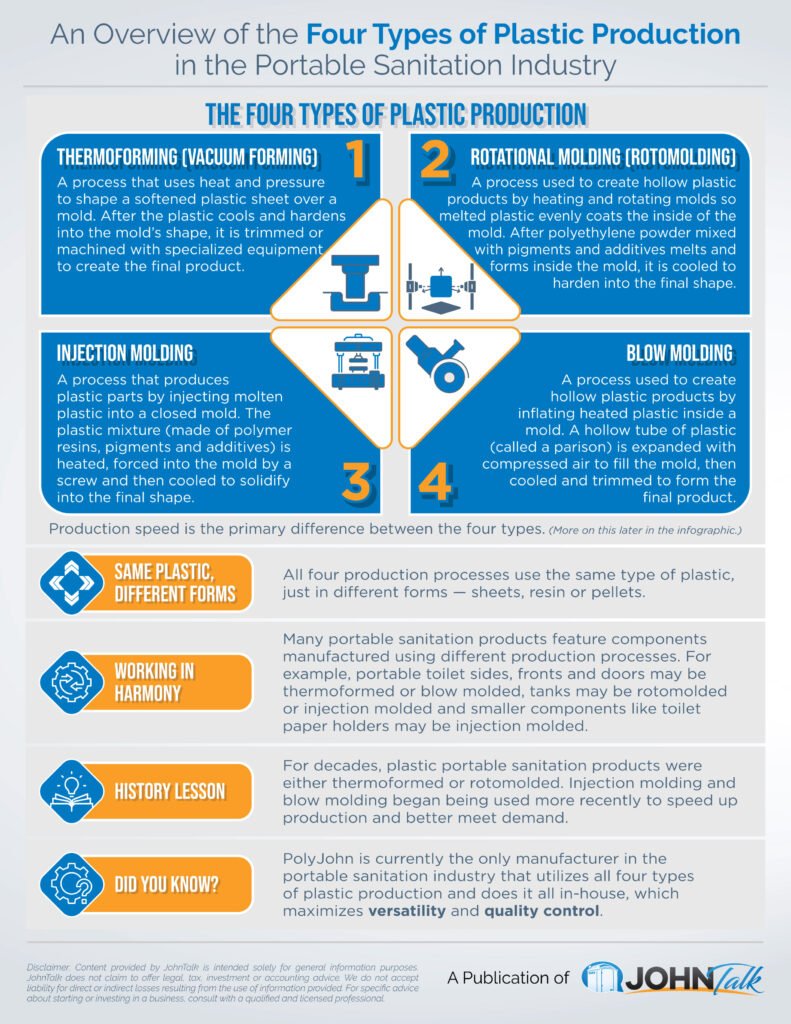

INFOGRAPHIC: An Overview of the Four Types of Plastic Production in the Portable Sanitation Industry
March 23, 2026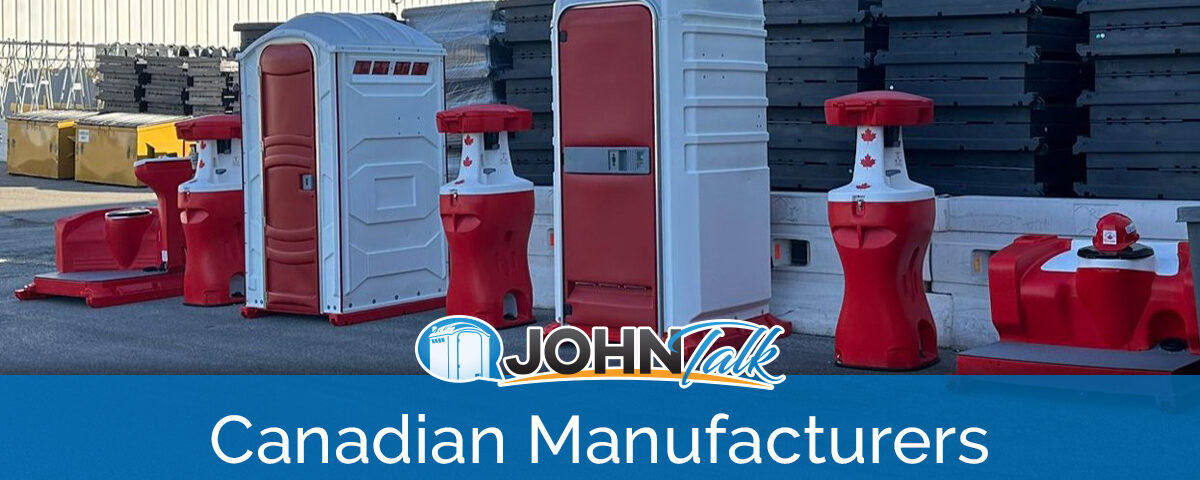
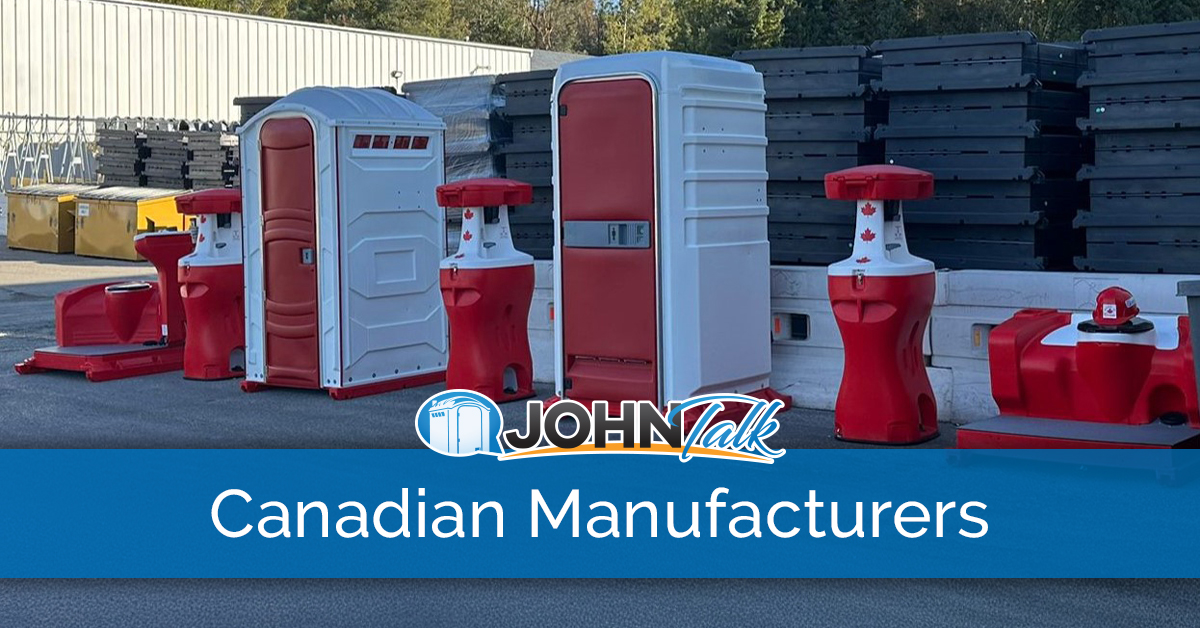
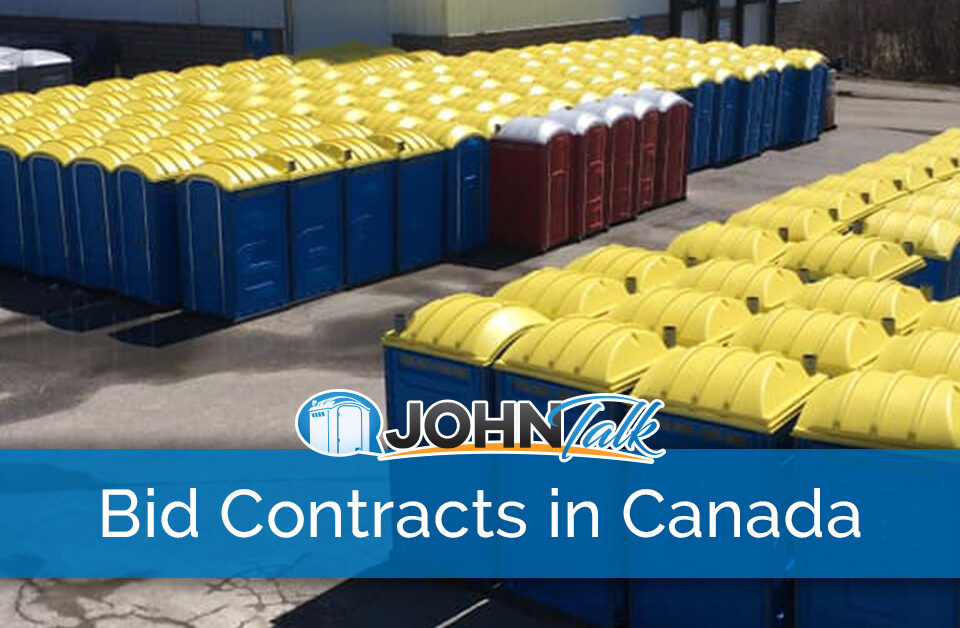
Photo courtesy PolyJohn Canada
Delays, shortages, and rising costs have pushed many portable restroom operators to rethink where they source their equipment. In Canada, where regulations and markets differ across provinces, sourcing portable toilets and sinks from domestic manufacturers can offer longer-term advantages than supply chains based solely on price.
New government policies reinforce manufacturing resilience and encourage domestic sourcing, making it a great time to consider Canadian manufacturers. Learn how manufacturers in the portable restroom industry source materials and operate to see if partnering with domestic suppliers is a good fit for your business.
How “Buy Canadian” Policies Impact Manufacturing and Supply Chains
In Canada, federal policy is reshaping where products are made, how fast you can get them, and whether parts are available when you need them. The Buy Canadian Policy aims to make it financially easier to manufacture in Canada and boost production, prioritizing Canadian suppliers, goods, and services through procurement frameworks and incentives.
Meanwhile, federal, provincial, and territorial governments are working to reduce internal trade barriers and streamline the movement of materials and goods across regions. The International Monetary Fund estimates that removing policy-related burdens could “boost output in Canada by 7%.”
For PROs, especially those in smaller or more remote provinces and territories, these changes can improve delivery timelines, freight costs, and access to inventory. As government initiatives roll out, operators and manufacturers will have more opportunities to connect with nearby suppliers and secure government contracts.
Where Portable Sanitation Manufacturing Materials Come From
Portable sanitation manufacturing depends on a multi-tiered supply chain, spanning plastics, metals, and mechanical components. Canada has plastics covered, even as global resin prices fluctuate, thanks to a growing energy sector and stable petrochemical capacity. Canadian manufacturers source materials from a variety of suppliers and increasingly partner with local businesses to strengthen supply chains.
Manufacturing materials come from several sources:
- Canadian and U.S. polyethylene producers supply raw materials, like High-Density Polyethylene (HDPE) pellets
- Global chemical suppliers in North America, Europe, and Asia provide specialty components, such as UV additives
- Broader industrial networks supply seals, gaskets, and other portable restroom parts and hardware
Manufacturers located in Ontario’s manufacturing corridor generally benefit from stronger logistics networks and closer proximity to plastics and metal suppliers. Being near major transportation routes and distribution hubs makes it easier to get raw materials, ship units, and restock parts. Canadian manufacturers with multiple warehouses and regional distribution networks can often get supplies and equipment to operators faster.
In-House vs. Outsourced Canadian Manufacturing Models
Buying locally doesn’t guarantee equipment is made in Canada. When considering suppliers, think about how different manufacturing models balance costs, support, and stability. Canadian manufacturers may manage plastic production processes in-house, outsource them to external partners, or assemble units from purchased components.
Handling production in-house gives manufacturers greater control over quality, durability, and design. For example, at PolyJohn’s Orillia, Ontario facility, experienced teams transform resin pellets into long-lasting, UV-resistant products. Every component, from injection-molded handles to rotational molded sinks, meets strict standards. This attention to detail extends to sales and support services, with dedicated regional representatives serving Western and Eastern Canada, Quebec, and Ontario.
Manufacturers that focus primarily on assembly and distribution may have lower capital costs and more flexibility when sourcing components. However, their production timelines and equipment quality are often more dependent on supplier networks.
Get the JohnTalk “ALL-ACCESS PASS” & become a member for FREE!
Benefits Include: Subscription to JohnTalk Digital & Print Newsletters • JohnTalk Vault In-Depth Content • Full Access to the JohnTalk Classifieds & Ask a PRO Forum
Why PROs Choose Canadian Suppliers
If you’ve dealt with long lead times or stalled shipments in the past few years, you know how important it is to find reliable suppliers. Canadian manufacturers with resilient supply chains can reduce uncertainty caused by cross-border and offshore disruptions. Moreover, building relationships with your local reps can help you better manage capital purchases and parts inventory.
Canadian manufacturers with regional warehouses and local distributors help PROs:
- Secure additional toilets and replacement parts quickly
- Reduce freight and fuel surcharges when ordering multiple units or trailers
- Keep portable washrooms service ready
- Address issues early, whether dealing with shipping damage or requesting parts
Take Advantage of Domestic Manufacturing in Your Market
Supply chain diversification isn’t new, but it’s more important than ever. Having backup suppliers and sourcing products or equipment locally helps portable restroom businesses withstand economic pressures, price fluctuations, and supply disruptions.
Looking to Take Your Portable Restroom Business to the NEXT LEVEL? Download our FREE Guide: “Your Guide to Operating A Portable Restroom Business.”
Thinking About GETTING INTO the Portable Restroom Industry? Download our FREE Guide: “Your Guide to Starting A Portable Restroom Business.”